“If there is any further injury, you shall appoint as penalty eye for eye…”
– BIBLE, Exodus 21:23
One
I was a young man then so there would have been time to forgive. It was a sight to make the skin crawl. The two rowboats had made it back, but someone onboard was in grievous error. They did not know three boats had been sent to this place instead of two. On this day I was sent in the third, final boat to collect samples of a new species of plant. Something like what grows in the hedgerow back home. There were three boats sent to this place, not just two.
I remember I stood there on the grassy hillside my small knapsack over my shoulder with my small jars, vials just clinking and jingling inside. My first time stepping foot in this New World. The swaying grass was waist high in places. Looking down at the scene – the ship was just the size of my thumbnail from where I stood, its splintered wooden hull glittering and sparkling in the sun. The ship’s masts were already under sail at sea, just billowing in the wind, south bound to some new place. The Massachusetts Bay, I suppose. It looked toy-like bopping up and down in those dark, icy waters.
It represented everything I thought it was to be man. The culture. The refinement. The rise above primitive man. And it was my only transport to his works. I remember wishing I were back at University. That was only a month before.
You must remember I was only a boy. I was out of breath after running to the top of that hillside. The stillness on this land is eerie – there is no sound but for the occasionally squawk of the sea gull. So much different from the sounds of Cambridge with clanging of carts and horse hoofs along Broad Street. Which I will always remember now as those comforting sounds. You don’t appreciate the background noise until it’s gone.
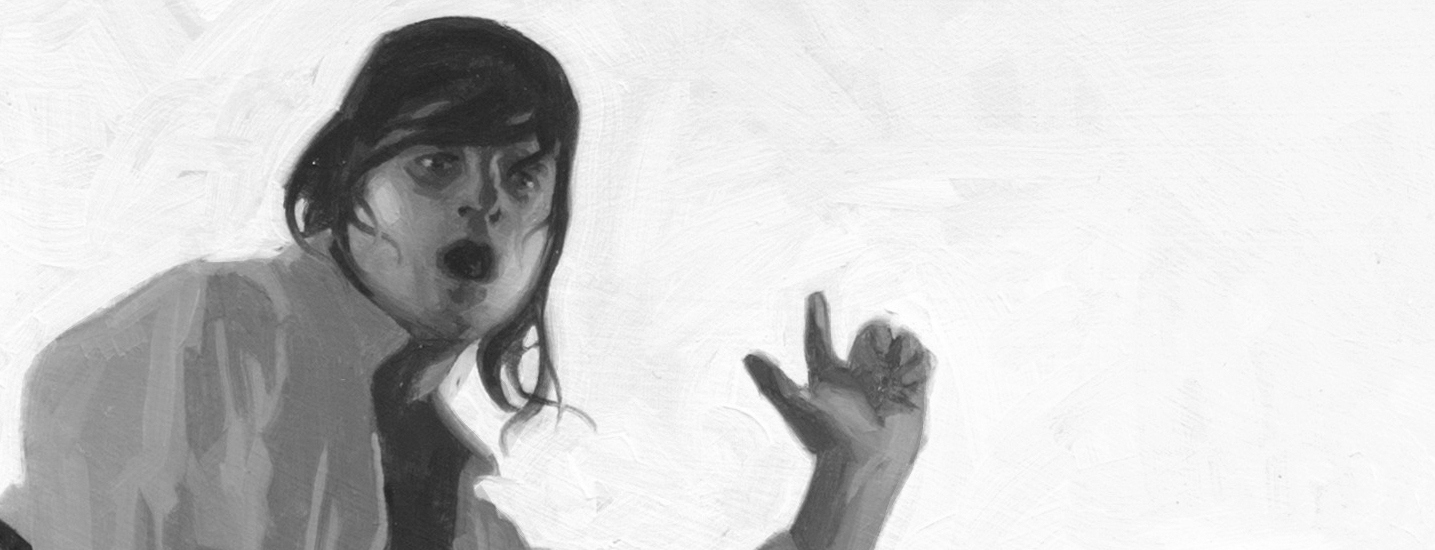
I had just come up from the pine forest a moment ago. I was cataloging and collecting samples of some peculiar plant species near the wooded area below. Beads of sweat were all over my face and, despite the circumstances, felt some relief to be on higher ground and in an open space as I was still recovering from what happened just a moment ago down there near the pines. The ship leaving was a terrible sight, but what made it more disturbing was the hand that reached out and touched my shoulder just a moment earlier in the bush. It had a wiry, sinewy strength just coming out from the pines. I had all I could do to pull away with a disgusted cry. Back home I would have thought it was just a drunk collapsed in the bush, but here it seemed more monkey-like than man.
It is November 14, 1619. I am STRANDED somewhere north of the Bay of Fundy.
Probably an island off of Newfoundland.
Looking out now the ship is just a small speck in a never-ending expanse of the darkest blue sea I’ve ever seen. They left without me.
My name is William Davies of Bootle.
God, help me.
Two
I heard whispers beyond the pines last night. It was an incessant, cryptic gabble and chatter of the worst sort. Much later in the night some clouds moved in front of the moon and, for a moment, I saw manlike shadows flickering here and there by a firelight. Indians. They are the Mi’Kmaq, I presume. I have no means to keep them away without a gun. They can do with me as they wish. I am thousands of miles from home, and my only means of transport have gone to places that are not known to me.
I think the natives of this place know that.
I hid in the tall grass for most of the night, and despite the cold and fear, I think I slept for an hour or two. I awoke this morning anticipating rescue. I would not allow myself to have expected less. I spent the whole day down by the shore – like a gentleman on a street corner waiting for his horse and carriage to arrive.
I am just visiting this place. My ride will be here any moment. What is happening (or being planned) over that hillside is of little consequence because I will be leaving shortly. Very soon. Sometimes my coachman comes late. That is all.
I had some food left in my knapsack and at midday sat down in the tall grass to eat some salted beef and dried peas. I didn’t hear anymore from over the hillside in the forest area. But they are there somewhere beyond the pines. I can faintly smell the smoke of their fire.
I don’t know what they are up to back there.
There was a light breeze from the south for most of the day. Perfect conditions for my ship to turn and come back this way. They were planning a special meal tonight, roasted duck and fresh biscuit to celebrate our landing in this place – I was sure when they saw the extra portions left over they would note my disappearance then. Or, if they were so inclined, a simple head count would have shown 31, when the night before there were 32.
As the day turned to late afternoon there were some concerns and worry that I wanted to jot. These were a few of my thoughts:
Why didn’t the men in the other rowboats (who had come ashore) call over to me to say they were leaving? It would have taken just a minute. A simple walk up this hill and then calling down to the pines which is about 100 yards away. Leaving the way did made it appear they were trying make oneself scarce. And what were they thinking when they pushed themselves away from the shore and saw my rowboat still ashore? Did they not think I might want to come along and join them on their voyage to a warmer place?
The sun sets quickly in this part of the world. By my pocket watch it is only three o’clock. I must say the sunset over the Bay Fundy is beautiful with the deep red light reflecting off the icebergs scattered as far as the eye can see. So, when I look out to the horizon on this rocky shore and, in some places, I see the tips of icebergs jutting up like the tips of mountains and I think this place is beautiful. A beautiful place to visit.
But not to stay.
But this next part bothers me most.
I can not find the others that came over in the third rowboat with me. I honestly spent as much energy today walking the shoreline looking for them and calling out their names as I did looking out toward the horizon for the ship’s return.
Atherton Winthrop? Mr. Newell? Are you there? This is William Davies of Bootle. Did you leave without me?
It appears that I was the only one not notified of the sudden departure. It must have been a frantic dash. They must have moved quickly, all squeezed together in the other two boats, to make it back to the ship and weigh anchor before I could note their absence in this place.
The weather is warmer tonight; more comfortable. And I did not hear anything more from the forest. The sun has set below the horizon now and stars in the sky look like diamonds with brilliant sparkle. I am not as frightened as I was the night before. I ate the last of what was in my knapsack so I will not be hungry when I try to sleep. I have also decided that two of the plants I took as a sample may have beneficial medicinal qualities. The bearberry for headache and false lily to calm the nerves. So all is not waste. I stood there on the grassy beach in this foreign land and just looked out expectantly to sea for most of the day. And while I do not to pretend to understand all of this, and what it all means for myself, my family back in Bootle, as it pertains to my life and the fate of my shipmates, it is of the utmost importance. Just a few hours before I would have not thought it was possible. Some part of me, some deeper thoughts, were telling me this is what it always was meant to be. My purpose. My chance to be Great. And, while I do not pretend to understand what it all means or, in this moment, appreciate its significance, I know one thing for certain.
They never came back.
Three
When I awoke I thought they were trying to make everything right. It felt different than the first night. There was the familiar rocking back and forth – like I was lying on the ship’s deck, just looking up at a cold sky. But I didn’t recognize the men on this ship. And then I discovered everything was wrong – I was being carried someplace. These were not my shipmates, they were the Indians and my heart sunk when I realized the worst part.
We were still in their strange world.
They were moving me someplace with the sense of urgency of a barber-surgeon taking the patient to the operating chair.
I was being carried on some type of woven cloth with a man holding me up and shuffling from behind and another holding me up from the other side. They were quiet, but very quick. I remember looking at the man carrying me by my feet; he was well-proportioned, clean and very healthy. A man in the prime of his life. Around his neck he wore an intricate necklace that looked like porcupine quill glimmering in the morning light. He carried himself as someone would who is comfortable with where he was. But, when he looked at me, he seemed repulsed as though he may become sick. His dark hair, oddly, was quite long like a horses mane and his face was perfectly blank – his eyes did not quite meet mine – they seemed to look through me like I was not quite human, an animal certainly, I was something alive to him but not quite man. There were 3 or 4 other men behind him with about the same expression. They all sort of leaned away from me as they carried me to their special place. They were carrying me along some path that only they knew, somewhere just above the coastline. I remember turning and looking out to the open sea, hoping maybe to see my ship returning as these may be my final moments, but just seeing wide open seascape, beautiful for sure. Still, I felt my stomach crawl when I thought about that ship sailing out to sea without me.
My shipmates. I had only known them for a month. I did not expect them to miss me necessarily, that is to say I did not expect them to miss my company. In that respect, I was at a disadvantage, because I was not one of them. I was, after all, just the naturalist sent from University (at the invite of the Virginia Company) to catalog and list the desirable plant specimens of this world – Acadia and Newfoundland, mostly. To be used by ship captains and planners for the next expeditions and eventual plantations in the New World. I did none of the actual work, or had a specific capacity aboard the Rosemary in terms of her daily functions. So there would be no function not complete that would cause someone to ask: Where is William?
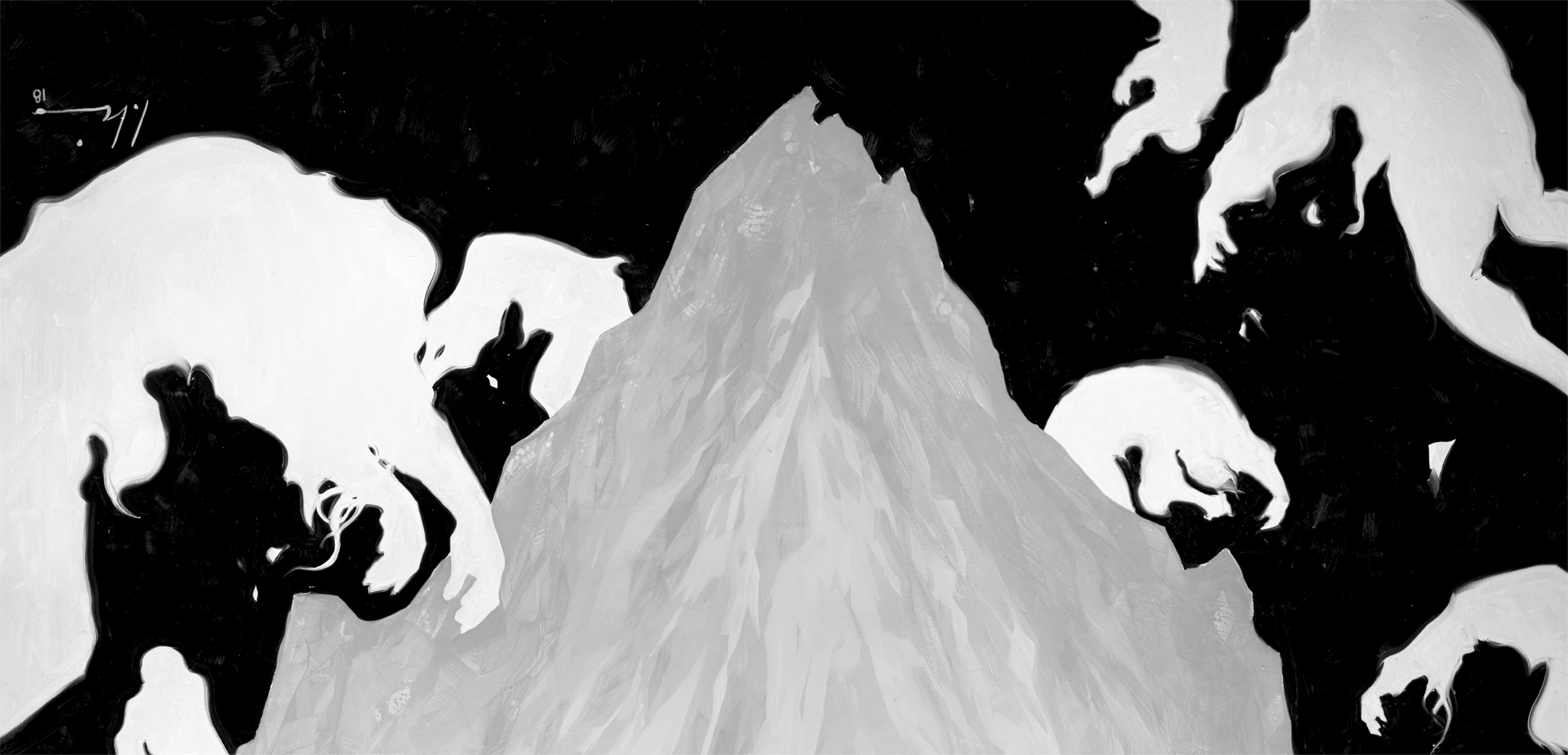
I attempted to talk to them, the Indians, but they remained distant with an air of the superior man – the expression of men that know you are talking to them, and although they can not understand or communicate with you, they still feel of a higher rank because you can not speak their language and their numbers are 5, while yours is 1. We may have lived together in such and such a time, but our brains just did not work the same. We rounded a bend on the shoreline and headed in what I thought was a northerly direction. I began to hear more sound – voices, chattering, things moving and the scent of smoke was much stronger (something was burning) – like we were coming upon a much larger group of Indians. And then the men carrying me turned towards the water and from the corners of my eyes I began to see the icy blue waters of the North Atlantic on both sides of me. We were moving down at an angle. A steep embankment to a much lower place. And then there was a pebbled beach. And then the sounds of water. I was set down, suddenly, on a hard, wet surface that seemed to float on the water. I will never forget the cold, black water lapping the edges of that pure white surface (an ice block of some sort?) When I landed on the block my bare hands sunk into the snow I let out a little shriek like a schoolboy. The Indian’s eyes seemed to soften like they found it all slightly amusing and then they stepped away. And then in one smooth motion one of the men carrying me lifted a long stick tucked under some stones on the shoreline, and with the help of the other three used it as a lever to separate the ice block from the shore and push it and me out to sea. I was stunned. The stick forced the ice block free and I was pushed out to sea with a tremendous amount of force and then a strong current pulled me right out. It was like being pulled away by an invincible hand; a vast, sweeping energy of the darkest kind. In only about a minute, before the man with the stick could bring it back to him from the push, the four Indian men were just thin, dark silhouettes on the shoreline. They all looked so clever standing there. If you blinked they almost seemed to blend into the scenery – like a trick of the eye. There was no time for an introduction, much less an opportunity to provide them reasons for my visit. I was just floating away on this piece of ice.
It was the place I was suppose to stay.
I was floating fast in a northwesterly direction and I just sat there frozen in fear. It was the second time in less then a day that a group of people from two Worlds, one from the Old and one from the New, had cast me away to some other place. I began to drift around the island and around the large tree stand that was blocking my view before and I saw a spectacular sight – before my eyes was a large Indian encampment with wigwam huts, and many, with their thin pencil line of smoke chimneyed to the cold, gray sky. They stretched out as far as I could see along the shoreline on this side of the island. Beyond them, much further down the coastline, I saw another large Indian town with long canoes moving hither and thither all along these coastal waters. They had their own world here. A civilization. They were ignorant of me, as I was of them. This seemed to diminish me. There were others and they were going about there way without thought of what I was doing or what I had ever done. They could live and die without knowing of me, or my works. Something about this spooked me as much as death. These emotions passed through me like a wave in just a matter of seconds. In Europe there was always a certain way, a script if you will, that you could follow and have your place that would not hold up here. It made me feel small and insignificant. It seemed to lessen my place, my cosmic specialness in the order of things.
And I don’t know why.
I suppose it was because if it was true now, it would surely be true when I was gone. And I was like every man – I wanted be a Hero. I wanted to be Great. Man yearns for the Heroic. He always has.
I noticed coming out from the tree stand was one of the men that carried me to the ice block. He just stood there at the edge of a small cliff like he was a god – looking out to sea and watching me. I was still close enough for him to see and hear me so I had to act fast. I felt this would be my last chance. And I had to lie, which I did not like, but I was the survivor type and I knew my life’s work was not complete. There was still work for me.
I turned my eyes toward the horizon.
“Yes, there is still work for me,” I said softly.
I reached into the back of my knapsack and took out my jars with plant samples and vials and held them up in the air and yelled as loud as I could, ”Medicine! Medicine!”
I just stood there and screamed and screamed while slowly drifting away on that patch of ice in a dark sea.
I must have sounded deranged, but that did not mean it would not work.
I sat the jars and vials down on the ice block, it was a very smooth, solid surface but moving quite quickly out to sea nonetheless and removed my shirt and began to scratch my body in extreme exaggerated movements. Pretending to be a man with the Small Pox. My movements were exaggerated so they would know I was pretending as my hands went over the imaginary lumps and bumps. I then held up the jars and vials with one hand and my knapsack up in the air with the other as high as I could and screamed “I HAVE MEDICINE!”
I was taking a chance. It would not be my first.
I had no way of knowing if he knew what I was trying to say – or if this group of Indians had become acquainted with the Small Pox. But if they had, and that was key, if they had, I thought it was likely that they would want to rescue me (just to see).
The young man just looked at me with a brave face – he had not budged a muscle or changed his expression the whole time. He just stood there as I continued to drift away. I said no more and in about a minute or so I do not believe he could have heard me anyway.
And then he turned and stepped back into the forest like he was the better man; disappearing like he was never there.
I just sat there motionless on the ice block, floating further and further away. I could still see the large Indian encampment and beyond the first two I believe I saw a few more scattered settlements further down.
And then coming from the shoreline, perhaps a quarter of mile away, I saw 3 or 4 thin objects in the water moving quickly in my direction – bobbing up and down amongst the waves. They were canoes. The Indians were coming out to see me.
Watching them stealthy coming towards me – it was a nervous time. They were like a spider on its web – seeming to skim across the surface of the water in their clever canoes – very quickly. It really felt no different then if a sea creature that appears outside of nature were approaching. I had no idea of their intentions or their state of mind.
They approached cautiously, but seemed to be more jovial when they got close; two in one of the canoes seemed to be taunting me and the other, in the last canoe, had a sly smile at first and then he started to laugh like the others. Then, one of them threw me a rope and they began to pull me back to shore. The rope they had strung all the way back to the shore.
I appreciated that.
You must understand something. Although I was first cast away to sea by these men on a small piece of ice, and then I had to lie to get them to rescue (it would not be my first) and then laughed at and taunted as they knew I was at their mercy they were doing what were suppose to do. They were reacting to something that happened to them. That is, they were reacting to me being left here by my fellow countryman, the crew of the Rosemary. In all honesty, I was the uninvited guest.
So, I was not upset.
At them.
Four
Six years have past.
I am still here. Where else would I go? The Rosemary has not returned, so there was nowhere for me to go. But, I will give them the opportunity to right this wrong.
If you happened to be sailing along the Newfoundland coast really anytime from about November of 1619 to June 1625 you would have seen a young Englishman with spectacles walking along the shoreline looking out to sea – just looking out expectantly for his ship, the Rosemary to return. If you were close enough to the shore you might have even seen the sunlight flashes from his spectacles. He was a man quite obviously separated from his culture. Perhaps abandoned to this place as a possible quarantine because his shipmates thought he may have the Small Pox. They would be wrong if that is what they thought. He just had a rash the day they sailed away. He would not have looked like a Hero cowering in the woods and peeking out to see who was passing by. That was no Hero standing there you would have thought. Great men don’t cower in fear. He was a man that did not appear to have a chance to be Great. He looked like a lonely, lost soul – kind of thin, sickly and out of place too.
Yes. That was me.
We have learned to co-exist – the Indians and I. It’s funny, I have actually found a way to be of some use to them (so they don’t ask me to leave, I suppose). Once or twice a year a ship from Europe lands here – some are fisherman, some are traders, some have passengers and letters to deliver to Virginia – and I have discovered that I can be of some assistance as an interpreter. If a ship from Europe lands here I make a large fire and with the smoke signal tell the Mik’maq that Europeans are here for trading. I have become a watchman of sorts for them and an effective link between the Europeans and the natives.
So I help both parties, and this place has become a destination for fur trading – beaver, otter and some mink too – because of it. Which has always been part of my plan – to make this place a desirable stop for the Rosemary on her return voyage.
The Indians repay me by not killing me. And, although I do know they are appreciative of the earnings from their fur trappings, I do sense my presence beginning to wear.
The Europeans repay me by keeping me updated on the whereabouts of the Rosemary. I take careful notes. They spent some time in the Virginian Sea and Jamestown. They were there until 1623, assisting with the construction of some houses and tending to some disputes with the Indians. On errand for the shareholders of the Virginia Company. And then from about the summer of 1625 to the spring of this year they have been in the New Amsterdam (Manhattan Island). And I have recently learned that they plan to stop here in Newfoundland to see about the beaver fur on their way back to England. They will probably have the typical trade fare: blanket, kettle, Indian corn and the Virginia tobacco. I was very careful the fur traders and fisherman kept the part about the cast away who speaks English secret. The element of surprise will be important…for what I have planned.
I have also learned something else about the Rosemary and her crew. The adventurers (investors) in England are not happy, they are not satisfied with their return on capital. As one fisherman said, “So little a return doth not animate the Adventurers.” There was no gold in Jamestown, and very little in the New Dutch Colony. The adventurers, surely, would like to see the Rosemary to return full of goods for profit. With their disappointment in the Rosemary’s expedition, they would probably consider her Profits more valuable then her crew.
From what I have learned from my visitors to this small island in Bay Fundy there has been a new development in Europe while I have been…
How shall I say it?
Away.
Apparently, the demand for beaver fur has increased in Europe for the purpose of beaver felt used in the production in beaver hat – and the European beaver populations are depleted – the sole purpose of which was to define one’s social status in English and French society. Ironic, isn’t?
Their social status.
What exactly is my social status here? Dear Reader, it is surely a place below yours.
And, although I have never professed to be perfect, I do have the source for beaver fur.
I walked up and down that coastline most of the day, everyday.
But I will take the chance. I must. I have been waiting. And although the Mi’Kmaq are a wonderful people and I have grown to appreciate their hospitality, it is a little cold, and the arctic conditions are little difficult in the winter time and after eating raw seal meat, I do miss the fresh vegetables and cooked meat back home. Salted meat from my country home is bliss (I know that now). While I eat the roots the Mi’Kmaq dig up on the tundra my shipmates on the Rosemary are probably dining on roast Duck and fresh biscuit. And, oh yes, I do miss my wife and two children. My son, Henry must be nine and Mary Beth she must be six as she was in the womb when I boarded that ship with my fellow countryman.
As I said earlier, the leaving me behind by mistake can be forgiven. I understand that part. But there is one question I have for my shipmates before I send them on their way. I have been asking myself this question every minute of every day for the last six years. When I take my evening walks along the beach with the red reflecting lights of the midnight sun and look expectantly out to the horizon, it always comes back to this.
Why didn’t they ever come back?
Five
I have been making preparations. When I began it seemed like it would be impossible. It would take 100 years to do that I thought. It did not. It took about 4 and half. How possibly could a young man, a boy really, pull this off. As far as I know, such a thing has never been done by one man to a larger group. Many times such an act seemed too big for me, or I was too small for it.
As I said before, every man wants to be Great. Every man wants to be a Hero. I left Bootle just a boy, not knowing how I would accomplish this – finding what it was I suppose to do to be Great – but just not having the assuredness that I would find a way.
And then the unexpected – the worst really – I was left on an island in a foreign world with Indians – stranded for six years. But, I have had time to plan and that was all I needed.
Time.
During the winter months – January and February mostly – sometimes you can see the icebergs from the shoreline in Newfoundland.
But not always.
Last winter I didn’t see any and I spent a good deal of time walking up and down the shoreline stumbling through the thickets and underbrush, around the nooks and corners and cutting my legs terribly on that gooseberry brush.
You see, I started walking the shoreline looking for the Rosemary to return, but over time I started noticing the icebergs too and I began to watch them closely. You see they start to catch the eye, and make the mind wander and think of other things – dark blue water is almost black here during the winter months and the tips of white mountains of ice are hard to miss shimmering and sparkling during the polar nights.
Once our relations thawed a little I asked the Indians why they set me out on an ice block for dead. They told me what I suspected. The Europeans have been using their island (and many others) as a quarantine for sick men for years. The Indians had no choice – it would not have been enough to just kill the cast away because his body would still be there – they had to do the same thing with the poor soul as the Europeans did to me – quarantine him.
Without any obvious means they came upon an ingenious solution. Set the sick man on a floating iceberg and cast him away out to sea. Out to the “godless place” the Mi’Kmaq call it. Sometimes they may kill him first – but, like in my case, not always.
When they told me this I began to smile and then I began to laugh, for the first time since leaving my country home in Bootle, I really started to laugh.
I laughed and laughed and laughed.
But, I did not laugh because I thought it was funny. I laughed because I had an idea.
I did not tell the Mi’Kmaq this idea, nor did I share it with the Europeans that stop here. I must be careful. If there is any suspicion or if anyone is tipped of my idea I will have no chance to pull this off. And, if there is one thing I have been wanting to do since the Rosemary left me here for dead it was this. And, although at the time I did not know what form it would take I knew I would have it.
It’s the one word that has been burned in my mind since the first day and everyday since when I look out to sea and just see the empty horizon (except, of course, for the icebergs). If I am caught after the act and someone asks how I could do such thing to my fellow countryman I will tell them I am man, not perfect for sure, but wanting to be Great but I am like every man with weakness and a taste for something bad.
Sun Tzu once said, “Know thy self, know thy enemy.” Well, the crew of the Rosemary may of known thy self, but they evidently didn’t know me.
On a cold, drizzly day in March 1625 I had my revenge.
Six
This is what happened. In early February of 1625 I first began to spot the tiny white silhouettes on the horizon. I’ve discovered they just creep down here from the Northern Parts at their own pace, like they have a mind of their own and without warning. They are a kind of visitor passing through.
I watched them for several weeks before I saw the one I had been waiting for. The stars, as they like to say, had aligned for me. That day I saw a large one about 200 yards out to sea. It seemed to just appear there like a stranger would at your door, glittering and sparkling in the morning light.
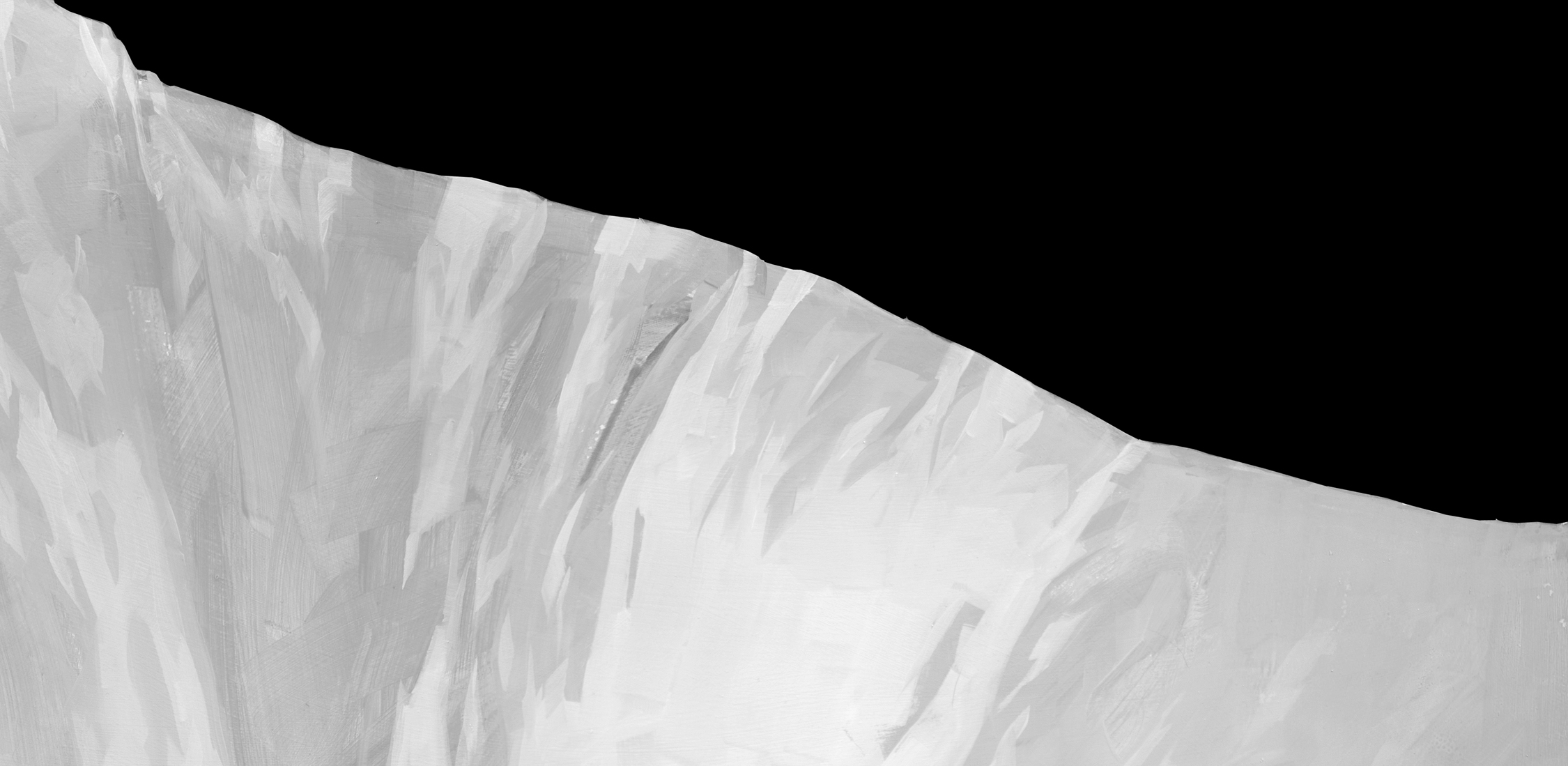
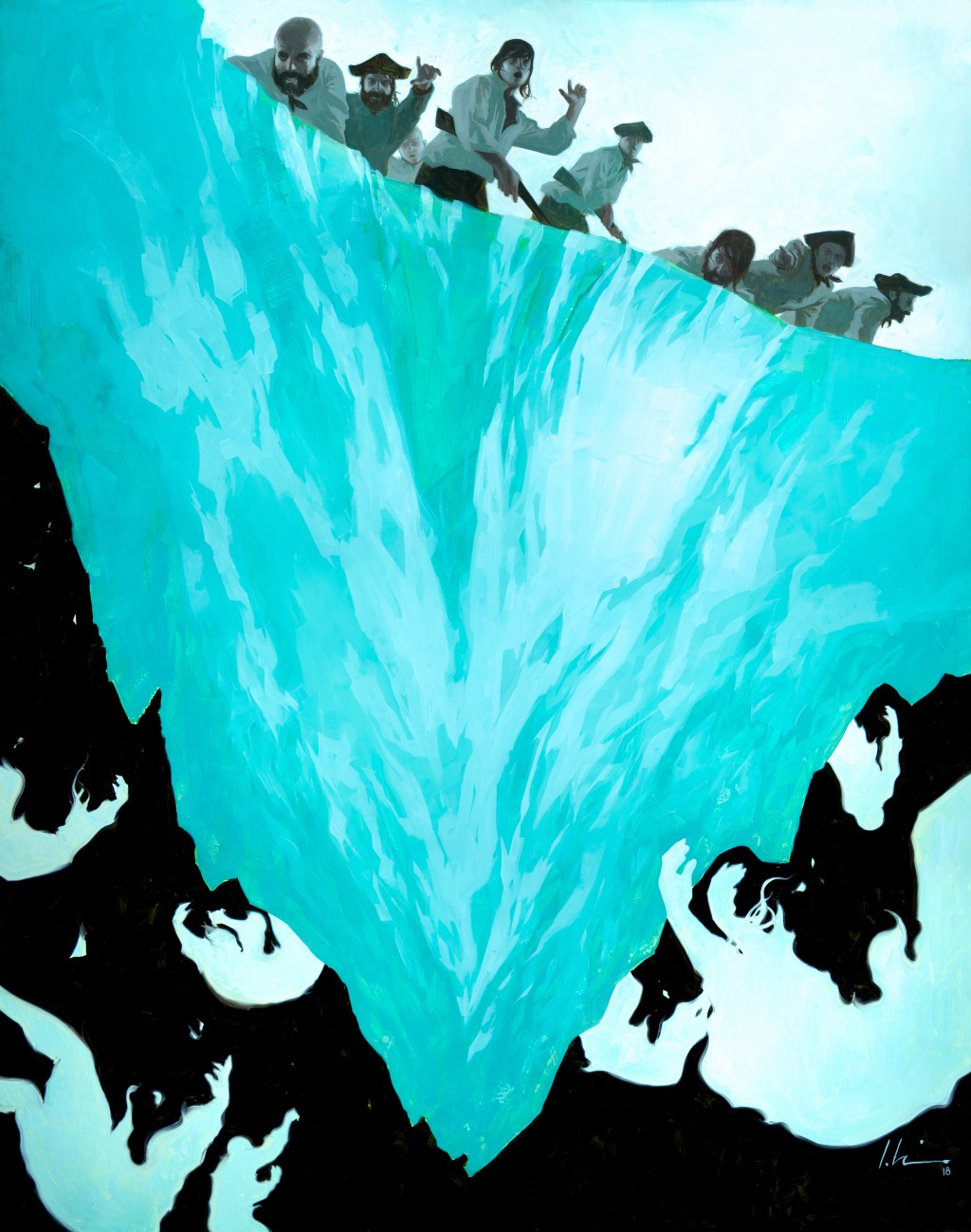
That iceberg must have been 30 feet coming out the water. It came up out the water, impenetrable, like a mountain, with the waves splashing and foaming against it like the surf hitting on a rocky ledge.
It was the largest I had seen this close to the shore. It came out of the water with a towering majesty, but was wrong in one respect. There was one side of it that seemed to have more ice under the water then above – its underside was exposed – it looked like 10 or 12 feet from what I could see. On the other side there seemed to be more ice above the water then underneath it. That is, she was coming out of the water at an angle on that side. There was nothing supporting half of that white mountain of ice – it was just coming out of those black waters like there was a giant head under the water, fully submerged except for one big, crooked tooth soaring out tall and glorious.
It looked wrong. Like it didn’t belong. (Like me, I suppose).
This is where I would start to chip away at her.
I would use her to make my “ice island”. You see you can not control an iceberg with a rope, but you can control a piece of one. By lassoing a small piece and using the current you can move one and with some luck “anchor” her ashore for later use. The Mi’Kmaq had been doing this for generations as a form of self- preservation. And then, when you get the undesirable or undesirables on the “ice island” you can use a little leverage and the currents to cast away them away to the “godless place” – amongst the streams of icebergs floating south someplace and then cruelly melting towards a midnight sun.
For my plan, it would be an “ice island” larger then any used before, about 24 feet long and 20 feet wide – enough space to hold 31 men. And for leverage I would not use a stick, I would use the trunk of a large black spruce. A parting gift from the Mi’Kmaq. Then send them out to the godless place.
That morning I took out my rowboat and walked down to the water’s edge. I remember the waters were calm in the morning so I paddled right out to the iceberg, into her long, dark shadow. The iceberg seemed to be alive (they all do). Just kind of moving and shifting around without warning and making those bubbling and bursting sounds. It was a dangerous place. Just a piece of ice breaking off her and falling into the water might create a wave to kill you. But I was fearless that day, more then I have ever been, and that was my power.
I got right up next to the iceberg and hammered in my stake to the iceberg and then tied a rope from it to my rowboat. So the rowboat would stay put while I climbed her and did my work.
The arched tooth part of the iceberg was about a 15 foot climb. I wore some moccasins that the Mi’Kmaq had cleverly attached sharp stones on the bottom and front for support. The Mi’kmaq were not here with me during this but they were here in spirit. I was also fortunate to make an opportune exchange with a trader passing through to the Plimoth Plantation last fall. Some black fox fur for a flint knapping hammer. It’s a small pick ax with a curved blade and a short handle that feels wonderful in your hand.
The trader laughed at me after the exchange and said, “You don’t look like the type to tote a flintlock (gun). What will you be doing with that, cutting through an iceberg?”
And then he just laughed at me (like so many have).
And I laughed along with him.
The rowboat rocked a little when I lifted my leg that first time and swung the little flint hammer home into the iceberg. A clean, secure hold in the ice. I lifted my leg from the rowboat and began to clamber up the side. There were places with ledge were I could stand with at least one leg while I removed the flint hammer and swung it into a higher spot.
I made it up to about the halfway point on the face off the iceberg were I could stand with both feet on a small ledge for balance. Now I would start to pound the face of the iceberg with the ice hammer. I pounded in another stake into the iceberg and attached another length of rope I had around my waist. It was a tedious, endless ordeal that I spent most of the day on. The section of iceberg that I was planning to cut through was about as thick as the height of your average Englishman and the height of about 3. I knew I would not have to go through the whole piece. After cutting through 3 or 4 feet and 8 or 10 feet high with some luck I was thinking it would buckle under its own weight. That day I had cut through about 8 inches in a section that would be about 4 feet high. The iceberg did not seem to be fazed. That was all I could do that first day.
Due to the currents, and the movements of them, I would only have about a day and a half before it would float past the place that I wanted to anchor her – for my special purposes. And once they float away they do not come back.
I went back to the shore that night and slept well in my little wigwam hut. I felt different that night, I had a feeling of power. Like I was poking life. I felt like I was about to intercept the events of life, disturb them, if will. Things were going to happen because of an idea in my head. That felt good – to know that.
You must remember, I slept alone on the edge of a coastline that was largely unknown to the civilized world except for me.
I awoke early the next morning and it was very cold. I also began to have the creeping fear that Rosemary may return early – perhaps even today before I am ready for her. And, I really had no idea if this piece of ice would calve off with the amount of cutting that I was planning to do. I tried to block these thoughts as they were my emotions and were, in effect, separate from what would actually happen if I followed this course.
So I rowed back out there and it was in about the same place.
The Mik’maq have moved on to another location where they will be until spring trapping beaver. As I said before, I have become a watchman of sorts for them. If a ship from Europe lands here I make a large fire and with the smoke signal tell the Mik’maq that Europeans are here for trading. But for this exchange, when the Rosemary returns, I will not be sending a smoke signal. There may be shouts and screams but there won’t be any signals from me.
Actually, I am hoping for a little privacy. This is a small matter between the crew of the Rosemary and myself. An opportunity to right a wrong. And that is all.
I swung my flintlock hammer harder into the iceberg that day. The trickles and pieces of ice were falling down the iceberg in a steady stream for most of the day. Before I stopped for the day I thought she was about to calve off – she was groaning and quaking like it could split at any moment. But it did not.
That night I just dozed really off and on – my back aching terribly from the day’s work. I had to switch hands near the end because they were tired so. My hands bled everywhere – it was a terrible mess inside my wigwam hut. It still felt all tingly and tender. Just as I was about to doze at early dawn I heard a thunderous crash like a rock from the heavens crashing into the ocean – that is all I could imagine it to be. And then I remembered the iceberg (and my “ice island”). And then I heard something else – it sounded like the wind, a strong gust – but I realized it was not. It was the water. A big wave was coming in.
I braced myself and then she crashed into the shore. The water didn’t come up to the wigwam, but I could hear the water out there approaching. And then I thought of my rowboat. I looked out there and it had been washed away.
I stepped out of my wigwam hut into an early morning light and looked out to sea. Although I suspected to see my “ice island” broken off the iceberg – I still could not believe my eyes. For a moment, I did not recognize it as the iceberg that I had been working on and had become so well acquainted.
The entire 30 foot section that was rising out of the water like a monstrous tooth had broken free and was floating away as a separate piece. The entire iceberg was still there, but it seemed to have rotated some to the left. When it lost the weight of my “ice island” it got a little top heavy and rotated just enough so that it looked like an entirely different animal.
My rowboat was floating right at the edge of the shoreline and I trotted over quickly to retrieve and pull it up onto the rocks. My ”ice island” was floating out there about 100 yards like a lonely dock for some strange craft. Although, it would not be lonely long. I was hoping to populate it soon with some gentleman of English stock.
When the morning light brightened a little more I gathered my rope and stakes and got into the rowboat to visit with her. The currents in this section of the ocean are not as strong so I would I have a little time to maneuver the “ice island”, and change her trajectory to the shore. When the Rosemary arrives I hope to have her anchored to the shore so she looks like a piece of the land.
Come over this way gentleman, I want to show you the other side of this island. Just around the bend here is the other side of this island that would make a fine harbor. Just watch your step as we cross this small patch of ice.
It will look like a safe place to walk.
I rowed right out to it for a closer look. It was perfectly flat – like a fine white cloth placed on a dining tabletop.
I studied it carefully and poked it a few times with a long stick and I could hardly move it all. I paddled around to the side closest to the shore and pounded in a few stakes and attached a length of rope. I then rowed back to the shore and tied the ropes to two of the large, black spruce trees near the water. This would at least prevent her from floating away. Now I would need to nudge her closer to shore as the currents pulled her south. I spent a good part of the day prodding her and poking her closer to what would be a temporary resting spot. After she had been nudged 4 or 5 yards, I would insert another stake, attach a rope and then go back to the shore and tie it to the black spruce tree. This would at least prevent her from floating back out and maintain her on the trajectory to her final resting spot. Then I would remove the ropes with slack and repeat the process. I repeated this process without rest until about midday. Doing it this way I had moved her almost half way to shore (about 50 yards).
I went back to my wigwam hut but could only sleep for an hour or two. The fear in me, the fear that I was this close to fulfilling my plan but if they were to return now it would all be for naught, gave me the strength to walk to the beach and pull the rowboat back into the water. I quickly scanned down the coastline and out to horizon but didn’t see any ship approaching (for now).
I rowed out to her. She just sat there floating; pristine white with 3 stakes in her at the corner with my ropes attached all the way back to shore. She was at least under some control. There were not any currents pulling her out here, but there weren’t any currents pulling her in either.
By the late afternoon I almost had her fit into her spot along the shoreline. It was a dangerous place. Along the shore there was a small inlet naturally carved out of the rocks where the waves just roll in. It just slices into the shoreline about 30 feet and if it were a piece of dry land, and not the turbulent seas of the North Atlantic, I believe it would have the width measurement for a horse and cart to pass. There, during the stormy weather, it is quite a sight with the waves crashing and splashing against the rocks. But it also serves another purpose: the currents will “hold” anything that happens to be in there – in this small inlet.
This is where the Mik’maq have been storing their “ice islands” for years. Once they’re in inside this slot (the cubby hole) they stay there. It takes quite a push to dislodge her.
Just as the sun was setting on the horizon I drove in my last stake and nudged her into the inlet. A large wave rolled in and pushed her in like a piece of timber fitting neatly into a ship’s decking.
The day was over now and storm clouds were beginning to roll in. Nothing more would happen tonight.
Everything was in place. It felt good, but I had been here before. I have already done this twice before – 3 years ago and the year before last. I was prepared each time, just in case. But no one came.
As I rowed back to the shore I glanced towards the horizon and I saw the sight that for many years I yearned for as rescue for me, to bring me back to my culture, to the place where I could be Hero. But now her sight meant something different. She was no longer a savior, or a rescuer, she was now something I felt sorry for (in a way). She gave me all the time in the world to plan – to make this place a destination, and then a trap – and because of that she didn’t stand a chance. I have made this place so much more then a mere destination. Coming out the fog were the wooded masts of the Rosemary. She was coming to the place she left six years ago. To visit with an old friend.
As night fell I went back to my wigwam hut and slept well that last night. In the morning I would see them all for the first time in six years. It will be a surprise for them. Just as I was about to fall asleep I had one more thought:
I have made this place so much more then a mere destination. It has become a trap.
By rights, the crew of the Rosemary made two mistakes. They left me in this place because they thought I was infected. They were wrong on that account. That was their injury to me. But their second mistake was the more egregious of the two: if you injure a man you better make sure he is dead.
Seven
I rose early the next morning and hurried up the same hillside I saw them leave me six years before. They were getting an early start as well. Two rowboats were already in the water before I crested that hill (the same two that has been here before – they no longer had the third boat. They had left that behind with me when they made their frantic dash to escape this place six years before).
I stood there watching them, and one of the men waved at me with some uncertainty, perhaps thinking I was a Frenchman. As they approached I recognized them all. There were three. Atherton Winthrop, a pot bellied trader was in the first boat, and Simon Bellingham and John Newell (of London) were in the other. Mr. Newell was the husband, ironically, of Eliza Knight a woman who I had been quite fond of as young boy in Bootle. But that is a different matter, and would have no bearing on the events that were about to unfold. I knew they did not recognize me (at least from this distance).
They came ashore, just smiling, eyes sparkling, confident like this was their place.
Atherton Winthrop spoke first. “Good day sir. We are taking this possession of this place in the name of the King of England. We do not want to harm you, but we will not pay too much for beaver. We will set a price on the beaver fur. And pay you at a later time.”
I just stood there looking at him, and listening.
“And what price will you pay?” I asked.
They told me a price that was well below market value. They had no weapons drawn, but I could tell by their manner and by the way they spoke (and they way they looked) that they thought I was alone in this place.
They looked at me as though they were the better man. This, I have grown accustomed as well (but it will end very soon).
Mr. Bellingham looked me over carefully.
“You are English. Where was your church? Where you part of the Glastonbury congregation?
I just shook my head no.
Bellingham now had a look of concern.
“Have you run off with the Indian? Where are your English clothes?”
I did not answer.
I was relieved (to an extent) that they did not recognize me, but, also, you must remember I have the mind of Man so being unremembered was also another twist of the knife.
It is man’s ultimate contradiction, maybe his tragic destiny – he wants to be a Hero at any cost; even his own life.
I then looked at each of them in the eye as I spoke.
“Yes, I can take you to where we keep a large store of beaver fur.” I turned around and pointed to the wooded area that came down to the “ice island”. “It is over there beyond the tree stand. The Mi’kmaq are over there too. But you must increase your number and show your strength. The Mi’kmaq will not be impressed by just three Englishmen. Even if you have a weapon you will not get their respect. It will be to your advantage to do that.”
Atherton nodded and licked his lips. And all three of them had a softer expression and seemed to edge backwards a bit. Putting more space between us.
“That is no problem. We can bring over a few more. Increase Haynes, Richard Winslow and a few more…”
“No, no,” I said. “You must bring everyone on board your ship. Your shipmaster too. It is the only way. The savages must see with their own eyes your strength in numbers. They are not impressed with mere talk and such.”
I spoke as an authority would on the subject.
Mr. Newell finally spoke, more thoughtfully I thought, then the other two.
“Very well. We will bring everyone onboard ashore. But, most will carry their rapiers. Some with their guns too. We would like to complete this trade before midday so we can be on our way.”
“Yes, of course Mr. Newell. If that is your wish. You will be on your way today.”
And that is how it happened. It was an amazing sight to watch the crew of the Rosemary filing off the ship and coming over to the shore in groups of three or four per boat.
By about midday all of them were ashore. Just stumbling around awkwardly in their English clothes as they were unfamiliar with this place. They all looked about the same, some were missing – including two pallid indentured servants that I remember well. Some were new, and although that gave me pause if they should be included in this, as I knew this was a matter of the heart, I decided that although it would be unfortunate for the newcomers to be included as they were not conspirators in the original act they should be more careful with the company they keep.
The Rosemary’s shipmaster, Increase Haynes, spoke with group down near shore in conspiratory tones and kind of turned and pointed toward me and motioned to the woods near the “ice island.”
I began to walk towards them and they stopped their meeting and Increase Hayes and Atherton Winthrop walked towards me. Behind them were two men that I remembered from our maiden voyage (country folk from Kedington) but I could not recall their names and they were holding guns.
Increase Haynes walked right up next to me.
“Alright sir, you lead the way to the beaver fur. Atherton tells me it is just beyond the tree stand.”
“Yes, it is.”
“Very well. Bring us there.”
I led them to the tree stand (and the “ice island”).
I looked back two or three times and they were all following me – the entire crew of Rosemary walking single file.
We came to the dense tree stand and I stepped onto the ice island and turned towards them.
Their expressions did not change and they did not seem to think walking down to this ice patch was unusual. As I said, the tree stand coming down to it was dense, seemingly impassable, and the “ice island”, seemed to be a logical way around them.
“Come over this way gentleman, I want to show you the other side of the island. After we exchange the beaver skins, I can also show you an area that would make a fine harbor for His Majesty. Just watch your step as we cross this small ice patch.”
I quickly crossed the patch of ice and came back over onto land as a few of them came onto the ice island. Before Atherton Winthrop could step off the “ice island” and onto dry land I motioned for him to stop.
“Just one moment, sir. You may be able to see the harbor from were you stand…on the ice patch.”
I then trotted out to the far edge of the ice island and pointed across the bay.
“Yes, you can see it from here. Mr. Winthrop, Mr. Newell, please come over to see.”
I motioned to the others that were just about to step onto ice patch. “All of you, please. Come over onto this ice patch, you must see the harbor from here. You can see the spot for the harbor best from this point.”
They stepped onto the ice patch and crowded over to the edge to see. There was an area out there that was indeed deep enough for a harbor, it was not spectacular and certainly not worth your life to see, but this is only something that might be considered after the fact.
I lingered for a moment or two as Atherton, Increase and a few others spoke to themselves and discussed the look of the harbor. These were men that were on the rise. They would coming home from the New World with a ship full of beaver fur and possibly even a new place to report for a trading station. They would be returning as Heroes. They seemed to be pleased with what they had seen so far in this place. Their posture was that of men that were important, and doing a Great Thing.
I stepped off the ice island and onto dry land as I smiled and motioned for the rest of men to step onto the ice patch to look. Some of the men had set down some of their belongings on the ice patch now – an indication that would stay for at least a minute two.
The entire crew of the Rosemary was now on the “ice island”. I stood there on land – my feet firmly on land with my toes right on the edge of the ice island. Every man from the Rosemary was standing on a floating piece of ice. This was only a moment a time. This was an opportunity of a lifetime
To right a wrong.
I quickly reached for a 15 foot trunk of a spruce that was about 16 inches and diameter. And carried it over quickly to the ice patch where the good men of the Rosemary were planning their next conquest. I did not look to see their facial expression, but I did hear John Bellingham ask “Why?” quite quickly with the tiniest tinge of fear. And one of the men hollered and sounded like a woman. I wedged the trunk of the tree between the ice block and land (I jammed in it real hard). I heard a great deal of commotion on the ice at that moment, but I did not look up. I heard one of the men scream like a women.
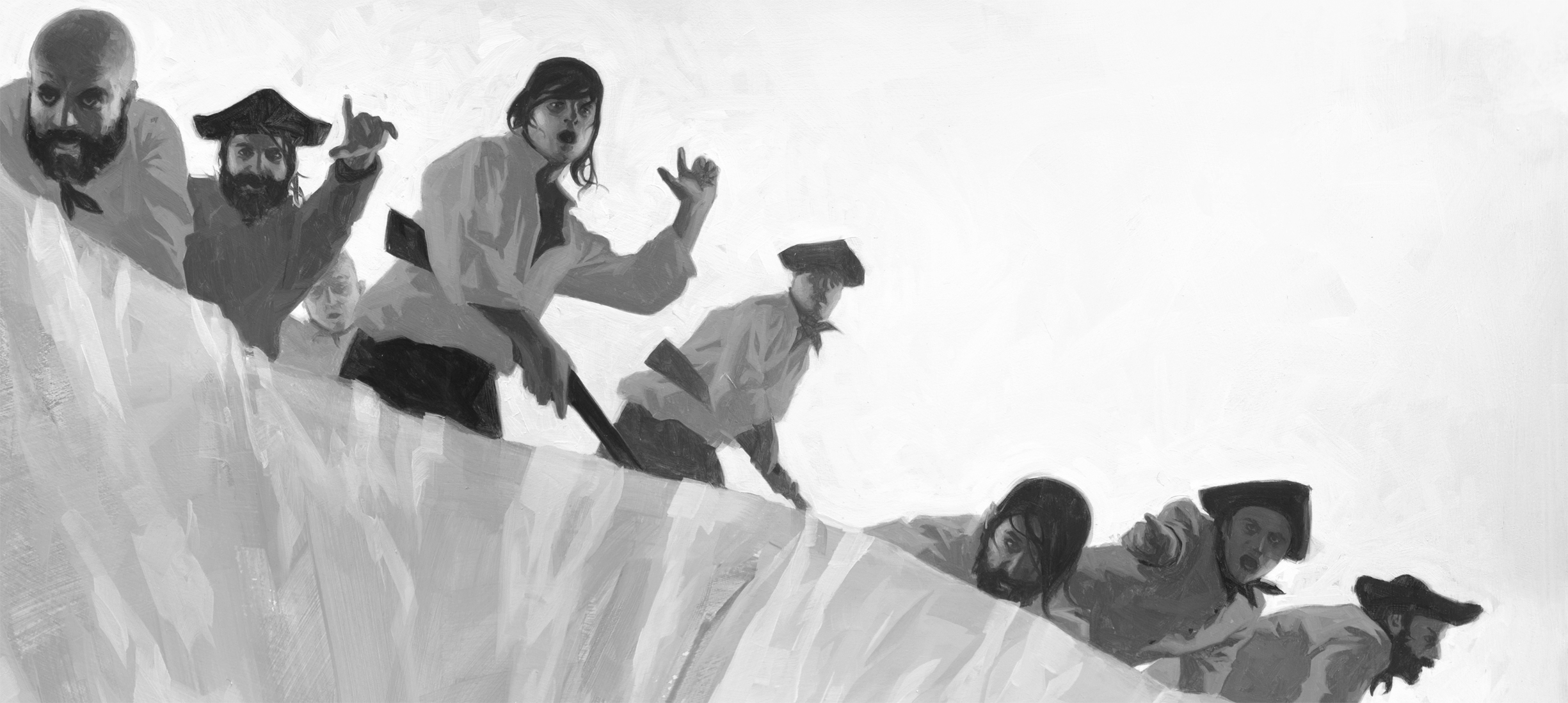
I felt the trunk sink cleanly into the ice about a foot and then I pulled her back with all my strength – leaning backward real hard. In just a second, as a I leaned back the trunk moved the ice block free from land and I heard a loud snapping sound almost like a gunshot but it was the sound of the ice patch breaking free and with almost a whooshing the ice patch just seemed to lift in the air and then just slide away with no resistance at all. I saw the men of the Rosemary. At least three or four them – I will never know their names – fell into the water and just disappeared. The others just stood there looking at me in their English clothes as though I had been wearing a costume and the man they took as a servant was a king.
They were all huddled together like they were suddenly crowded into a very small room with no free space. One of them, absurdly, drew his sword while just staring at me.
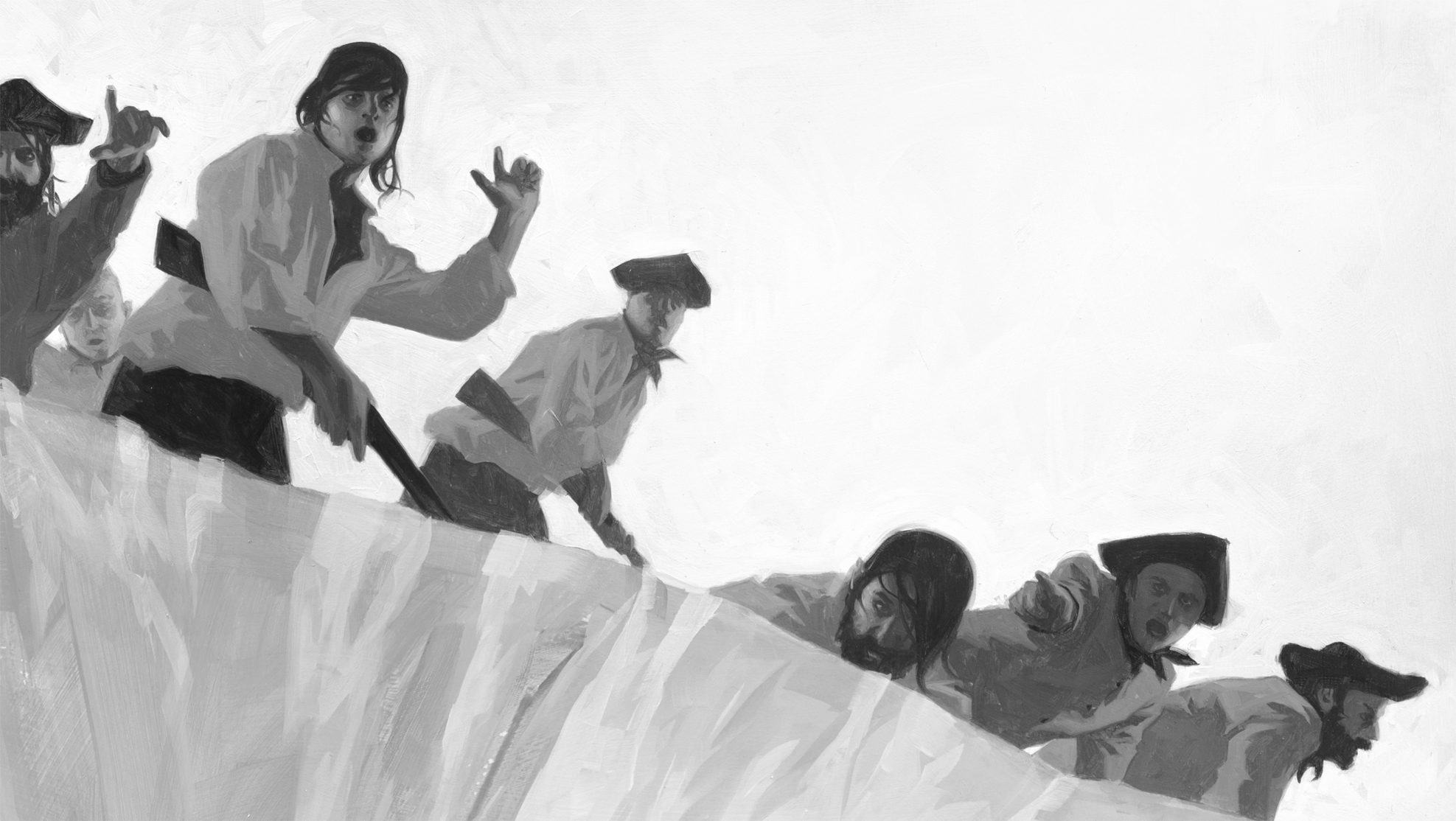
As they drifted out to sea I introduced myself.
“Do you remember me?” I said. “I am William Davies of Bootle. You left me here six years ago.”
Behind them the clouds began to move away from the sun and the midnight sun cast an ominous red glow over the water and the icebergs. They all just stood there huddled together; there were 25 or 26 of them out there floating away wondering how this boy from University had gotten the best of them. They must have known there was an injury. They must have know that this William Davies must have suffered and they were paying some sort of debt for this.
But, as to what was actually going through their heads, I will never know.
Eight
I watched them float away – just tiny, black figures jostling around on that piece of ice with a fiery red midnight sun behind them that seemed to cover half the horizon. They will float toward it, and then the real terror begins as the iceberg slowly melts and they will, one by one, fall onto the sea and drown.
And I will watch.
It took me a few days, but I filled the Rosemary with beaver fur and sailed back to England.
The journey back took about 3 months. And, although the Rosemary may have been considered a little light in the rations for 30, there was plenty for just me.
I landed in England on a warm sunny day, and I did not have to wait long before one of the principal adventurers, Thomas Thoroughgood, came down to the docks to greet me.
“Sir Davies, welcome back,” he said and gestured towards the Rosemary. “It is good to see you. I was not aware that you were you still alive. You had not replied to the letters, and Mr. Newell’s letter indicated you may have contacted the Small Pox.”
“No,” I said. “Mr. Newell was incorrect on that account.”
“Yes, yes, I always thought of that as more of an Indian disease. How was the New World, Sir Davies? Was their resistance in the coastal areas?”
“No,” I said. “In many places it was very quiet. Almost deserted. They seemed to have moved further inland, or died.
“Yes, yes, I believe you are correct Mr. Davies. The Small Pox may be our best ally in the colonization of those outer lands. Their numbers will become thinned.”
Mr. Thoroughgood took a worried look over to the Rosemary.
“And the others, Mr. Davies? Are they still aboard.”
I then told him of my account of being stranded in Newfoundland. A full account of my Newfoundland adventure. Leaving out only some of the more troubling parts.
“You discussed with the Indians the other crew members of the Rosemary. What did you say?”
I looked back toward the Rosemary with a grin, and looked back at him.
“What did you say Mr. Davies?
“I said, I said…”
“Sir Davies what did you say? You told the Mik’Maq you would have revenge on the crew of the Rosemary and then they asked you what were you were planning to do to them?
“Yes, that is correct,” I said. “They asked me what will become of them.”
Mr. Thoroughood’s face was now the color of ash.
“And what did you say Mr. Davies?
“I said: ‘Their Numbers Will Thin.’”
THE END


Leave a Reply